
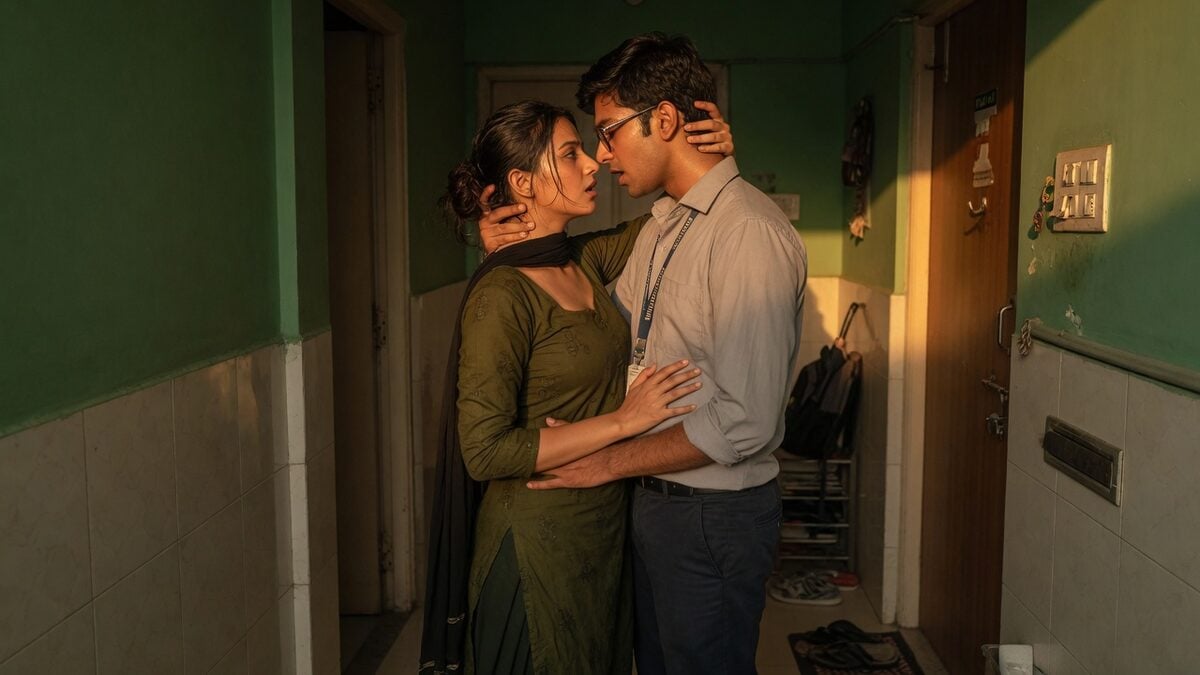
“You already said yes to him,” I told Zoya, and the steel tumbler clicked against the zinc counter harder than I meant.
She did not pretend to misunderstand. Evening prayer had already left Mahim’s dargah, and the stall’s front shutter hung at chest height, slicing the lane into scooter lights and wet stone.
“I said yes last Thursday,” Zoya said. “To Imran. Ammi’s friend’s son. The one who does the night clinic.”
The admission sat between us like a hot plate. I had come to help her close, stacking cups and wiping the paan board, the same habit we had kept since we turned twenty in this corner of India.
Her Pakistani-origin uncles still argued about cricket in Urdu and sent spice mixes when they could. Zoya had grown up in India, in this same cramped lane, with a stall ledger, a mustard kameez, and a stubborn jaw.
“You did not tell me.”
“I was going to. After the till.” The damp cloth in her hand stopped moving. “You look slapped.”
“You kind of did.”
She gave a short laugh, then a quieter one. Steam from the tea urn had pasted the kameez to her stomach. When she reached past me for the sugar tin, glass bangles knocked and her chest pressed my arm. Neither of us stepped off that contact.
“Imran is decent,” she said. “He will take me out of this stall. You keep treating the counter like a shrine.”
“I keep coming because you are here.”
Her mouth opened and shut. The cloth twisted. “That is a stupid reason to wreck a rishta,” she whispered, but her hip stayed on the zinc edge and her gaze stayed on my mouth.
The tumbler went down. “Then tell me to go home.”
The Rishta She Had Already Accepted
Zoya’s answer was not a speech. She caught my grey shirt and kissed me with months of till-counting anger. Cardamom on her tongue. Palms found her waist, then the salwar string under the kameez. The sound she made into my mouth was not a no.
We broke only for air. “If we start, I am not doing polite,” she said. “I want you tonight. Before I turn into somebody’s decent plan.”
That was enough. The second kiss was clumsier, hungrier. She dragged me around the counter into the back, where jute sacks of loose tea leaned on a folding cot she used on slow afternoons. One yellow bulb made her bangles look like cheap stars.
The kameez came up because she lifted it. Cotton bra, dark, a little damp from work. She laughed at my face and pulled my mouth to her breast, fingers in my hair, still talking in fragments. “Do not be gentle like I am glass. I stood here and said yes to him. I can stand here and take you.”
Jeans peeled. Chappals kicked aside. Her salwar pooled at one ankle because we were too impatient to do it neatly. She sat on the cot edge and pulled me between her knees. Heat through wet cotton, then that underwear dragged aside. The head of my cock rubbed her and she hissed through her teeth, grabbing my wrist to keep me there.
“In,” she said. “Rehan. In.”
The slide into her was slow and ugly and perfect. Tight from weeks of nothing and from the fight still in her shoulders. Her forehead hit my collarbone. For a few breaths we only stayed locked, the tea sacks smelling like a warehouse, the lane murmuring beyond the half shutter.
Then she moved. Not a performance. A grind that asked for depth. Hands held her hips and gave it, the cot complaining, her bangles keeping a stupid rhythm against my back.
“Thursday I sat in Ammi’s room and nodded like a good girl,” she said against my throat, each word broken by a thrust. “Imran talked about a clinic and a two-BHK. I kept thinking about your stupid grey shirt at this counter.”
“You could have said no.”
“I could have. I did not.” Her nails scored my shoulder. “That is why you are inside me. Not because I am sweet.”
The honesty made it worse and better. She was wet enough that the cot edge went slick. Each time I bottomed out she bit down on a sound, then let a smaller one escape anyway. The yellow bulb painted a stripe across her stomach. Sweat collected in the hollow of her throat where a thin gold chain sat, the same chain she had worn since college.
“Harder,” she said. “I can still hear the till in my head.”
The pace changed because she asked, not because a script said so. The cot’s weak leg skidded a finger’s width on the concrete. A sack of tea tipped and leaked dust that stuck to her calf. She laughed at that, breathless, then pulled my hair until our mouths met again, messy, teeth clicking.
Outside, a vendor shouted about last bananas. Inside, Zoya’s salwar stayed trapped on that one ankle like a reminder we had not planned this. My grey shirt hung open. Her bra was shoved above her breasts and left there. None of it looked like a film. It looked like two people who had wasted years stacking cups.
“Tell me you hate that I said yes,” she whispered.
“I hate that you said yes.”
“Good. Keep hating it.” She rolled her hips to take me deeper. “Do not turn kind now.”
Kindness was not what the cot was doing. Friction, heat, the wet clap of skin, her inner thighs shaking against my hips. She reached between us and rubbed herself with two fingers, practical as she was with the sugar tin. Her mouth fell open. The first climax hit her in a hard, silent clench that milked my cock and made her eyes go glassy.
We should have stopped there. Shame had a delayed bus in this city. It had not arrived yet.
When the Front Shutter Shook
Someone hammered the front shutter. Three hard hits, metal on metal.
“Bhai, ek paan,” Rafiq’s voice shouted, the regular with the stained teeth. “Zoya beti, shutter kyo neeche?”
We froze with me still inside her. Nails dug into my shoulder. She swallowed, then pitched her voice toward the lane, almost steady. “Band ho gaya, Rafiq uncle. Kal subah.”
A grunt. A scooter kick. The lane took him.
Pulling out felt like the decent move, late shame finally jogging up the steps. “I should go. If he talks—”
Zoya locked her ankles at the small of my back. The decision that had been hide-and-stop turned in her face. “No. He reminded me this stall is already a rumor machine. I am not dying half-finished on a cot because of Imran and a paan uncle.”
She rolled us, surprising for how small the cot was, and sat down on my cock with her kameez still bunched under her arms. The new angle punched a sound out of both of us. She rode with her palms on my chest, hair coming loose from the clip, eyes open like she wanted the choice witnessed.
“Look at me. Not at the shutter.”
Looking was easy. Zoya at twenty-six, Pakistani-origin stubbornness in the set of her mouth, Mumbai stall dust on her knees, riding like she had unpaid invoices in her spine. The gold chain bounced. Her breasts moved with each drop. When she leaned forward, the chain tapped my lips and she left it there, a small rude blessing.
“You are going to come in me,” she said, not as a negotiation. “Then you are going to get off my cot so I can count.”
“Zoya—”
“I know what I am asking.” Her rhythm stuttered, then found a meaner groove. “Thursday I gave a yes I cannot even taste. This one I can feel.”
The stall, the tea dust, Rafiq’s fading scooter, Imran’s imaginary two-BHK, all of it narrowed to the clutch of her around me. She put my hand on her hip and used it as a handle, showing the depth she wanted. Sweat ran down into the mustard cloth still rucked under her arms. The bulb hummed. Somewhere a pressure cooker went off in a neighboring kitchen, ordinary as hunger.
Her second climax was louder. She stuffed the end of her dupatta between her teeth too late. The clench dragged me with her. I came hard, hips jerking up off the cot, spilling into her in pulses that left my thighs shaking. She kept me there through it, forehead to mine, breathing like she had run the length of the lane.
For a minute the only moving thing was the tea urn ticking as it cooled.
Zoya lifted off with a wince and a practical hiss, sat on the cot edge, and pulled the salwar up her other ankle. Seed slid along her inner thigh. She wiped it with the same damp cloth she had used on the counter, made a face, and tossed the cloth into the bucket.
The kameez came down. The bra stayed crooked underneath. Bangles found their old place on her wrists while she twisted her hair back into the clip. None of it was ceremony. It was closing time.
“Button your shirt,” she said. “You look robbed.”
Buttons. Jeans. Chappals that had ended up under a tea sack. The grey shirt still smelled like her throat. She was already at the zinc, flipping the till open, notes in small Indian stacks she could count without looking.
No other city in India mixed dargah loudspeakers with local-train racket like this. The half shutter framed a strip of that noise, waiting.
“Imran still has his yes,” I said, because leaving it unsaid felt like another lie.
Zoya did not look up from the notes. “He has Thursday. You had the cot. Do not stand there making it a speech.” A pause, then flatter: “If you wait outside like a hero, my brother will come for the cash box and see your face. Go.”
The side flap of the shutter lifted enough for a man to duck. Lane air hit, fried onions and wet stone. Behind me the till kept whispering paper. Zoya stayed with it, mustard kameez, crooked bra, a rishta still sitting in the week like a bill she had already signed.
I stepped out into Mahim without asking her to follow, and the shutter flap fell behind my shoulder.